.png)
.png)

For many homeowners, the idea of renovating a property usually begins with the enjoyable part of the process, imagining a brighter kitchen, opening the rear of the house towards the garden or adding an extra bedroom. What tends to come later, is the realisation that even relatively straightforward residential projects in the UK, involve a surprisingly large amount of approvals, technical coordination and legal procedure before construction can begin.
The real challenge is usually not the system itself, but understanding which rules apply to their project, the order the steps should happen in, and which consultants or approvals are needed.
Although every property and every project is different, most residential refurbishments and extensions tend to follow a similar administrative path, and understanding the broad structure early on can save a considerable amount of stress, delays and unexpected costs.
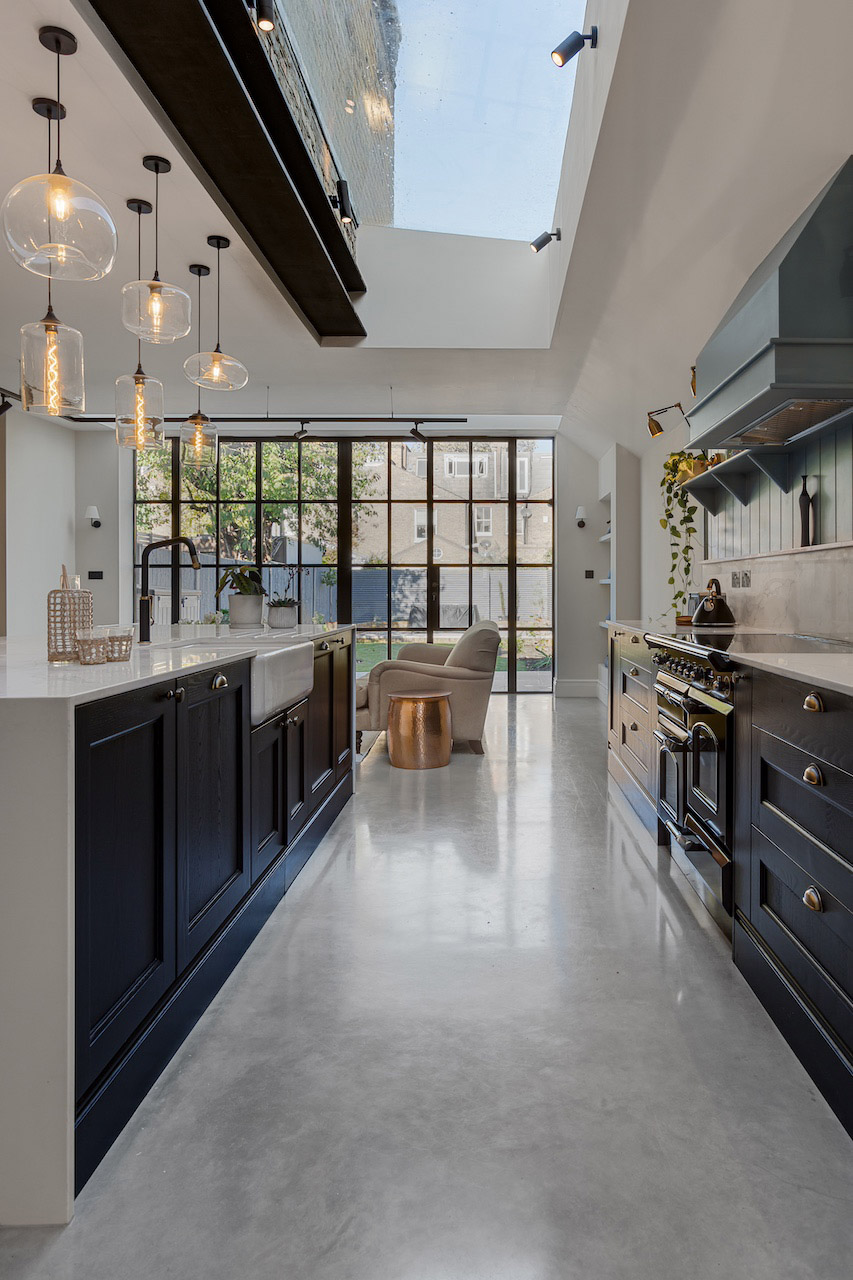
Before planning applications or contractor quotations are discussed, the starting point for most successful projects is simply having a proper conversation with an architect.
Many homeowners understandably begin by looking at inspiration images online or speaking to builders before fully understanding what can realistically be achieved within the property itself. An early consultation with an architect often helps establish the wider picture much more clearly, particularly in London and other urban areas where planning restrictions, neighbouring properties and technical constraints can strongly influence the design from the outset.
An experienced architect is not simply producing drawings, but helping coordinate the entire process, balancing design aspirations with budget, planning policy, construction practicality and regulatory compliance. Quite often, the role involves identifying problems before they become expensive problems.
When appointing an architect, homeowners should generally look for professionals registered with both the Royal Institute of British Architects, Architects Registration Board", commonly referred to as RIBA and ARB.
At the early stages of a project, the architect will normally help assess whether planning permission is likely to be required, whether structural alterations are feasible, whether neighbouring properties may trigger Party Wall procedures, and whether the proposed budget is realistic for the scope of works.
A relatively short consultation can already prevent homeowners from pursuing ideas that are either unlikely to be approved or unnecessarily expensive to construct.
Planning permission is probably the part of the process most homeowners have heard about, although there is often some confusion about what planning authorities assess.
In broad terms, planning permission is primarily concerned with how the proposed works affect the external appearance of the property and its relationship with the surrounding area. That means local authorities are generally assessing matters such as:
Contrary to what many people assume, planning departments are not usually reviewing whether the building is structurally sound, thermally efficient, or compliant with detailed construction regulations. Those matters fall largely under Building Regulations, which is a separate process entirely.
Some smaller residential projects can proceed under permitted development rights, meaning formal planning permission may not be required, although even in those situations it is often advisable to obtain professional confirmation before construction begins. Permitted development rules can become complicated once factors such as conservation areas, previous extensions, loft conversions, flats, maisonettes or listed buildings enter the picture.
In London particularly, many homeowners are surprised by how sensitive planning authorities can be regarding rear extensions, roof alterations, glazing proportions and visible changes from the street. Even projects that seem modest on paper may require careful design development to achieve approval.
A well-prepared planning application is therefore not simply a collection of drawings, but usually a coordinated presentation explaining why the proposal is appropriate for the property and the surrounding context. This is one of the reasons why experience matters considerably during the design stage. A proposal that technically fits within policy can still encounter resistance if it appears visually unresolved or fails to respond appropriately to neighbouring properties.
Planning approval timelines can vary significantly depending on the borough, the complexity of the application and whether objections arise from neighbours or planning officers. In relatively straightforward cases, decisions are commonly issued within eight to ten weeks, although revisions and additional information requests can extend the process.
If planning permission deals mainly with how a project looks externally, Building Regulations focus on how the building performs technically. This includes areas such as:
Even projects that do not require planning permission will often still require Building Regulations approval.
This stage of the process involves either the local authority building control department or an approved private building control inspector, both of whom are responsible for reviewing the technical design and carrying out inspections during construction.
There is sometimes a misconception that building control inspectors are supervising the builder or managing construction quality in a general sense, but their role is more specific than that.
During the construction phase, inspections are usually carried out at key stages, for example:
At the end of the process, assuming everything complies satisfactorily, a completion certificate is issued, once a singed declarations is singed by the client, the contractor, and the principal designer (the architect). That document becomes extremely important later, particularly when selling or refinancing the property.
For homeowners, one of the most important practical points to understand is that technical design drawings used for Building Regulations approval are generally far more detailed than planning drawings.
A planning application may show the general arrangement and appearance of the proposal, whereas Building Regulations drawings begin resolving exactly how the building will be constructed.
This stage often requires coordination between the architect, structural engineer and other consultants.
Although homeowners sometimes perceive this technical phase as administrative rather than creative, it is one of the most important parts of the project, because many construction problems originate from insufficient technical coordination before works begin on site.

One of the more mistakenly feared parts of residential renovation work in the UK is the Party Wall process.
The “Party Wall etc. Act 1996", applies when certain types of work may affect a shared wall, boundary or neighbouring structure, which is particularly common in terraced and semi-detached houses throughout London. Typical situations where Party Wall procedures may apply include:
The process usually begins by serving formal notices to adjoining owners, informing them of the proposed works. At that stage, neighbours broadly have three possible responses.
For homeowners unfamiliar with the process, that final point can sometimes come as an unpleasant surprise, particularly in London where Party Wall surveyor costs can increase significantly on more complex projects.
In practice, most Party Wall matters proceed relatively smoothly when communication with neighbours is handled reasonably early and professionally. Problems tend to arise more frequently when neighbours first become aware of a project after contractors arrive on site, or when the proposed works have not been clearly explained.
Party Wall procedures are largely protective rather than confrontational, creating a documented framework that helps avoid disputes if damage or structural concerns arise during construction.
On certain projects, particularly larger refurbishments or more ambitious extensions, a fire engineer may become involved.
For most homeowners, this is not something to worry about, and in many residential projects it is not required at all. However, where a design differs slightly from standard Building Regulations guidance, additional justification may be needed to confirm that the proposal still achieves an acceptable level of fire safety.
This can happen with more open-plan layouts, unusual stair arrangements, extensive glazing near boundaries, or more architecturally ambitious spaces.
In those situations, a fire engineer may prepare a technical strategy supporting the proposed solution. In practice, this usually provides flexibility within the design rather than indicating a serious problem.
Another consultant homeowners occasionally encounter during the technical stage is a thermal assessor.
Modern Building Regulations place significant emphasis on energy performance and heat loss reduction, which means highly glazed extensions can sometimes require additional calculations to demonstrate compliance.
Where glazing percentages become particularly high, SAP calculations or other thermal assessments may be required to confirm that the overall extension still complies with energy efficiency standards.
In practice, this does not usually mean homeowners need to abandon contemporary glazing altogether. More commonly, the design team adjusts the specification, glazing performance, insulation strategy or ventilation approach to achieve compliance.
One of the recurring themes across all these processes is coordination.
A residential renovation project may involve an architect, structural engineer, building control inspector, planning officer, Party Wall surveyor, contractor and occasionally additional consultants depending on the complexity of the works.
For homeowners undertaking their first major renovation, that can initially feel overwhelming, although the process becomes far more manageable when approached methodically from the beginning.
This is often where experienced architectural involvement becomes particularly valuable, not simply in producing drawings, but in helping coordinate the overall sequence of approvals, technical information and consultant input.
Good projects are usually the result of careful preparation, realistic expectations and clear communication between everyone involved.
Home renovation projects are often discussed primarily in terms of finishes, layouts and aesthetics, although behind almost every successful project sits a fairly substantial amount of technical and administrative coordination.
Approaching a renovation with realistic expectations, professional guidance and sufficient preparation usually leads to a far smoother experience overall, and very often allows homeowners to focus more on the exciting parts of the project rather than constantly reacting to avoidable complications.
In many cases, the most valuable role of the architect is not simply designing the final space but helping homeowners navigate the entire journey from initial idea through to completed construction, while keeping the process coherent, compliant and as stress-free as realistically possible.